How to Choose the Right Epoxy Flooring for Industrial Workshops?
Industrial workshop floors must withstand harsh environments such as long-term mechanical pressure, chemical corrosion, and heavy impacts. Epoxy flooring, with its customizable nature, is a preferred choice. However, different workshops have vastly different operating conditions, and blindly choosing can easily lead to a shortened floor lifespan and soaring maintenance costs. This article starts from core needs and provides a scientific selection method to help companies find the right solution.
I. Clarify 3 Core Needs to Avoid Mismatches
Before selecting a flooring type, it's crucial to accurately analyze the workshop's operating conditions, focusing on the following three key points. These are critical prerequisites for determining the type of flooring:
Mechanical and Load Strength: It's necessary to determine whether the workshop has heavy equipment (such as machine tools and forklifts), the weight of the equipment (whether a single unit exceeds 5 tons), and the frequency of forklift traffic (whether it exceeds 50 times per day). The stronger the load, the higher the requirements for the flooring's compressive and flexural strength.
Chemical Corrosion Risk: Determine if there is daily contact with corrosive substances, such as acidic solutions (electroplating solutions, rust removers), alkaline substances (sodium hydroxide solution), and organic solvents (machine oil, paint), and the mode of contact (dripping, immersion, splashing). The stronger the corrosion, the higher the corrosion resistance of the coating system needs to be selected.
Cleanliness and Hygiene Standards: Food processing and pharmaceutical workshops must meet the requirements of dust-free, easy-to-clean, and disinfectable conditions; ordinary mechanical workshops only require basic dust protection. The higher the hygiene standard, the stricter the requirements for the seamlessness, smoothness, and disinfectant resistance of the flooring.
II. Comparison of 4 Mainstream Epoxy Flooring Types: Matching to Needs
Epoxy flooring commonly used in industrial workshops is mainly divided into 4 types, with significant differences in performance and applicable scenarios. The appropriate type should be selected according to the above requirements:
(I) Epoxy Flat Coating Flooring: Basic Dust-Proof Type
Core Performance: Smooth, matte surface, good dust-proof effect, low cost, compressive strength of approximately 50 MPa, resistant to mild chemical corrosion (such as small amounts of machine oil).
Suitable Workshops: Lightly operated workshops without heavy equipment or strong corrosion, such as electronic assembly workshops, warehousing workshops, and general office support workshops.
Advantages and Disadvantages: Short construction period (3-5 days), simple maintenance; however, wear resistance is generally average, unsuitable for frequent forklift traffic or heavy object impact scenarios.
(II) Epoxy Mortar Flooring: Wear-resistant and Compressive Strength
Core Performance: The intermediate coating contains quartz sand or corundum, achieving a compressive strength of over 60MPa. Wear resistance is 3 times higher than flat coating flooring, capable of withstanding 5-10 ton forklift pressure, and resistant to moderate chemical corrosion (such as dilute acids and alkalis).
Suitable Workshops: Workshops with heavy machinery and frequent logistics transportation, such as machining workshops, automotive parts workshops, and hardware stamping workshops.
Advantages and Disadvantages: Balances wear resistance and cost, offering high cost-effectiveness; however, the surface has a fine texture, making cleaning slightly more difficult than flat coating flooring, unsuitable for scenarios with extremely high hygiene standards.
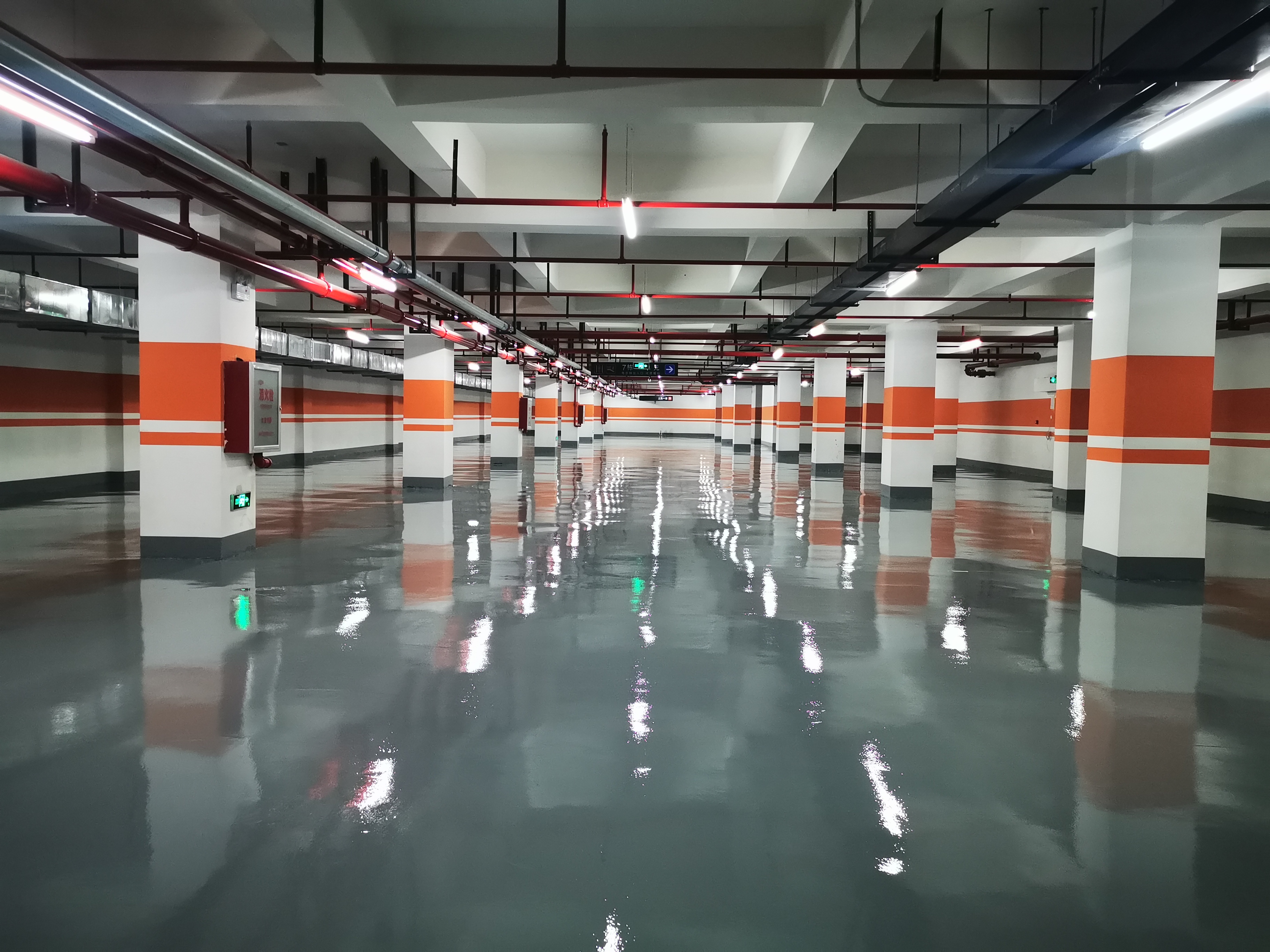
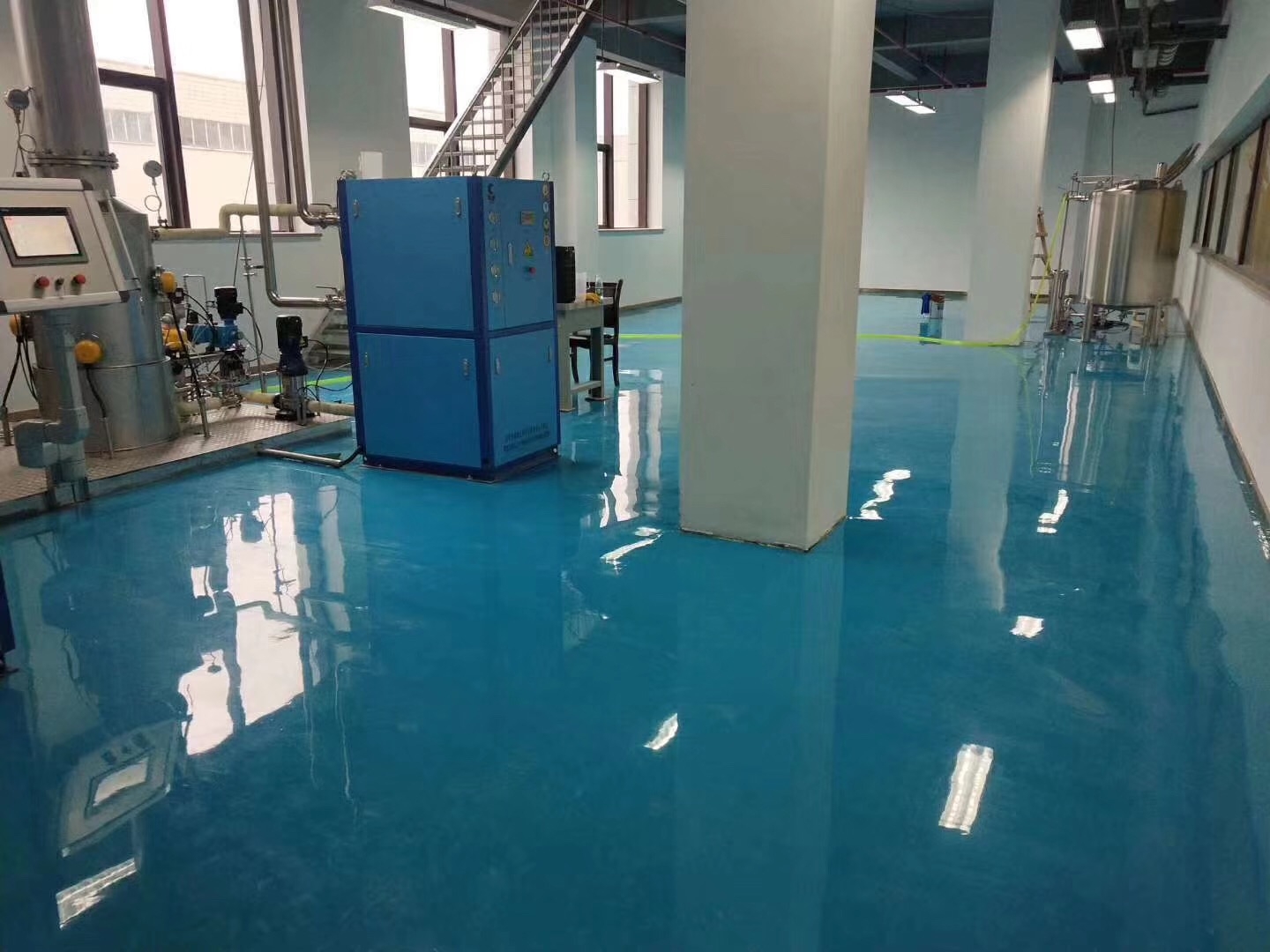
(III) Epoxy Self-Leveling Flooring: High Cleanliness Type
Core Performance: Forms a seamless, smooth surface through self-leveling technology, achieving a high dustproof rating (up to Class 10,000 cleanroom standards), easy to clean, resistant to disinfectants such as alcohol and hypochlorous acid, resistant to moderate corrosion, and surface flatness error ≤2mm/2m.
Applicable Workshops: Workshops with high cleanliness requirements, such as food processing workshops, pharmaceutical preparation workshops, and precision electronics workshops.
Advantages and Disadvantages: Seamless and easy to clean, with high aesthetic appeal; however, its compressive strength is slightly lower than mortar flooring (approximately 55MPa), making it unsuitable for workshops with heavy equipment, and requiring high surface flatness during construction.
(IV) Epoxy Anti-corrosion Flooring: High Corrosion Resistance Type
Core Performance: Employs a multi-layer system of anti-corrosion primer + fiberglass cloth + anti-corrosion topcoat, capable of withstanding long-term contact with strong acids, strong alkalis, and organic solvents (such as sulfuric acid below 30% concentration and sodium hydroxide below 50% concentration), with a temperature range of -20℃ to 80℃.
Suitable Workshops: Workshops with highly corrosive conditions, such as electroplating workshops, chemical raw material storage workshops, battery production workshops, and pickling and phosphating workshops.
Advantages and Disadvantages: Strong corrosion resistance, extending the service life of the floor to 8-10 years; however, the cost is higher, the construction period is longer (7-10 days), and the surface hardness is slightly lower, requiring avoidance of scratches from sharp objects.
III. Selection Pitfalls: 3 Easily Overlooked Key Details
Besides matching core performance, neglecting the following details can easily lead to problems in later use and requires close attention:
1. Substrate Treatment: Regardless of the type of flooring chosen, the strength of the base concrete must be ≥C25, and the flatness error ≤3mm/2m; if the ground has cracks or sand, it must be cured or repaired first, otherwise it will lead to delamination and cracking of the flooring.
2. Construction Environment Control: The ambient temperature during construction should be between 5℃ and 35℃, and the relative humidity ≤85%; low temperatures will cause the flooring to cure slowly, and high humidity will cause the coating to blister, especially in the rainy season in the south, dehumidification preparations should be made in advance.
3. Supporting Services and Warranty: Prioritize manufacturers that offer integrated "design-construction-after-sales" services, and clearly define the warranty period (1-3 years for standard flooring, 3-5 years for anti-corrosion flooring) to avoid being left unattended in case of problems later.
The selection of epoxy flooring for industrial workshops is essentially a precise match between "operating conditions" and "floor performance." There's no need to blindly pursue high prices or high parameters. Instead, combine the three core requirements of mechanical load, chemical environment, and cleanliness standards, while also considering details such as the ground foundation and construction environment. This will allow you to select a cost-effective and long-lasting flooring solution, providing reliable assurance for workshop production safety and efficiency.