
What are the differences between hardened abrasion-resistant flooring and epoxy flooring?
Abrasion-resistant flooring and epoxy flooring each have their advantages: the former uses cement aggregate to achieve superior abrasion resistance, suitable for high-wear environments such as factory workshops; the latter uses epoxy resin to achieve a smooth and waterproof finish, perfectly suited for cleanroom requirements such as electronics workshops. Precise selection based on load-bearing capacity and aesthetic requirements is crucial for a durable floor.
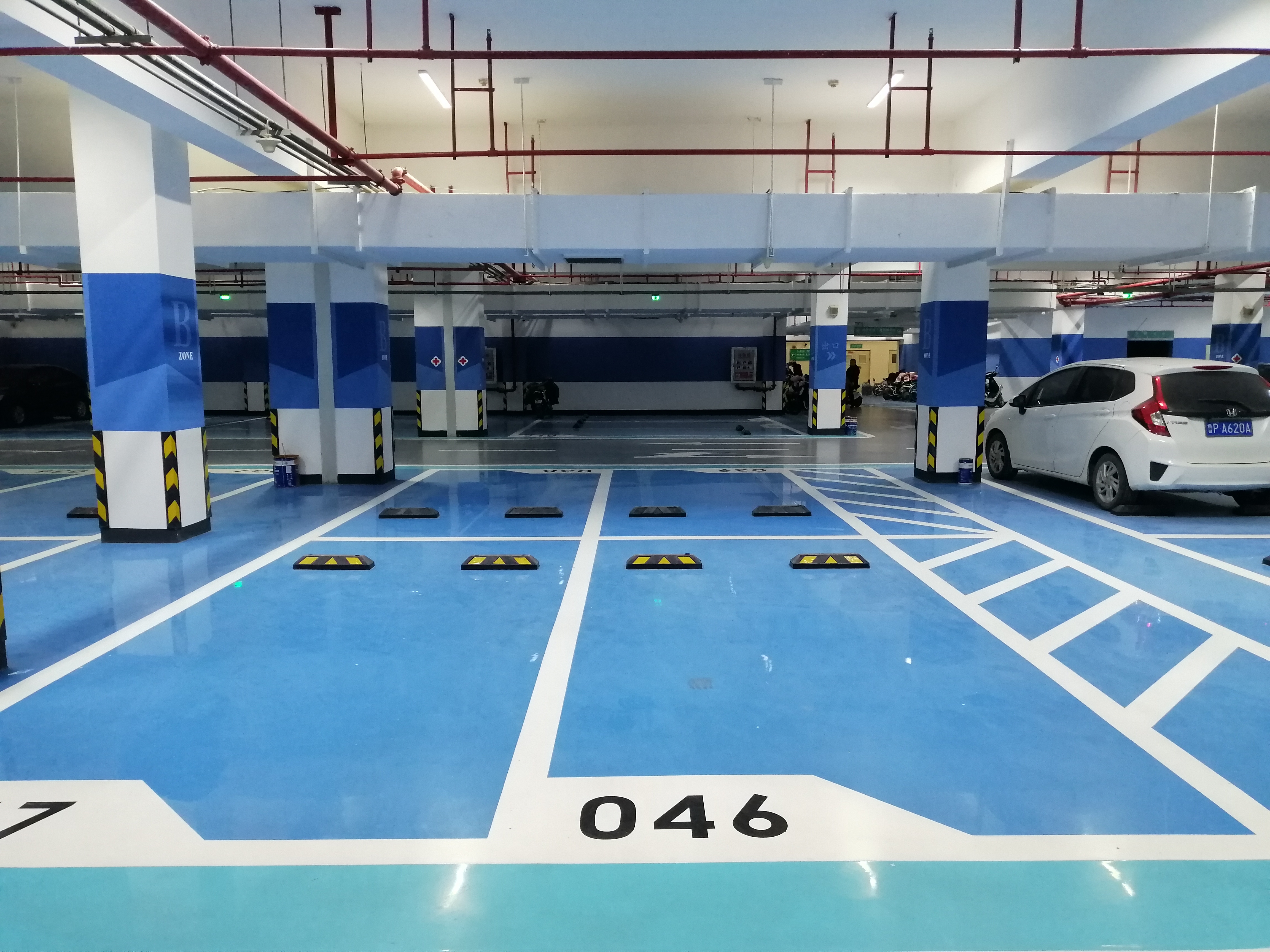
Abrasion-resistant flooring and epoxy flooring differ significantly in materials, performance, and applicable scenarios, as follows:
1. Different Materials
Abrasion-resistant flooring: Primarily made of cement and aggregates (such as corundum, quartz sand, and other abrasion-resistant particles), it is an inorganic material and is usually applied simultaneously with concrete pouring, bonding with the base layer to form a unified whole.
Epoxy flooring: Uses epoxy resin as the main component, combined with curing agents and other additives to form an organic polymer coating. It is an additional coating material applied or laid on a concrete base.
2. Different Performance Characteristics
Wear-resistant flooring: Its core advantage is its strong wear resistance, capable of withstanding heavy loads and frequent friction, and high compressive strength. However, its surface is relatively rough, with lower gloss, and its waterproof and corrosion-resistant properties are average.
Epoxy flooring: Its surface is smooth and flat, with excellent dustproof, waterproof, and corrosion-resistant properties. It is easy to clean and can be made in different colors and gloss levels. However, its wear resistance is slightly weaker, and it may be damaged by long-term heavy pressure or scratches from sharp objects. It also has poor weather resistance (susceptible to aging due to UV radiation outdoors).
3. Different Applicable Scenarios
Wear-resistant flooring: Suitable for high-wear, heavy-load environments, such as factory workshops, warehouses, parking lots, and logistics centers.
Epoxy flooring: More suitable for scenarios with high requirements for cleanliness and aesthetics, such as food factories, electronics workshops, hospitals, laboratories, and shopping malls.
Both have their strengths; the choice should be made based on a comprehensive consideration of factors such as the wear intensity of the environment, cleaning needs, and budget.